leon --help

i build the part of
your business you
still do by hand.

websites, apps, ai and automation for businesses across the u.s. — built around how your company actually works, instead of how a template guessed it would. you don't have to know what software you need. tell me what's still manual, broken, or missing.

tell me what you need see the work
  • 9things i build
  • 33,772us zip codes in one system i built
  • 4languages i work in

built for businesses like:

restaurantsfood trucksauto repairdental medical officesreal estateproperty mgmtgyms contractorstradeslogisticswarehousing retaile-commercesalonsnonprofits training companiesghost kitchens

leon --services

what i build

every price is the honest floor for a typical build, not a fixed menu. most jobs turn out to be three or four of these stitched together. tell me the problem and i'll quote the shape of it.

01

business websites

fast, works on a phone in a parking lot, and you can change the text yourself without calling me. redesigns and rescues of a site you already have count here too.

$1,200+
02

booking & online ordering

appointments, staff calendars, deposits, reminders — or a cart that takes orders without handing a commission to a delivery app. the reminder is the part that pays for the build.

$600+
03

ios & android apps

through review and onto the store, including the listing and the subscription plumbing. i've had an app rejected under a guideline it didn't violate, and argued it back on the same binary.

$4,500+
04

ai chatbots

trained on your business, not the internet. it says "i don't know" instead of inventing a price you'll have to honor, and hands off to a person the moment it should.

$1,000+
05

ai phone agents

answers at 2am, qualifies the caller, books the job. the rule for when it stops talking and fetches a human is written down, not guessed.

$1,200+
06

workflow automation

the retyping, follow-ups and handoffs currently held together by one person remembering to do them — including the invoices and forms nobody should be keying in by hand.

$600+
07

dashboards & internal tools

the four numbers that decide your week on one screen, and the small tools that delete the copy-paste out of a job someone does forty times a day.

$750+
08

seo & ai search

found on google, and found by the ai assistants people increasingly ask instead of google.

$450+
09

custom software

customer portals, crm, inventory, document systems — and the problems that aren't the shape of anything above. built around how your business actually runs, which is most of the interesting work anyway.

custom

starting prices are honest floors, not instant quotes — the real number is agreed in writing before anything starts. the big ones have their own pages: all services → by industry →

leon --work

things that are actually running

real systems, running in production. each one described by the part that was actually hard, because that's the part you're paying for.

  ┌───────────────┐
  │  swipe feed   │
  └───────┬───────┘
          │  card tapped
          ▼
  ┌───────────────┐   ┌──────────────┐
  │  ai layer     │──▶│  sources     │
  └───────┬───────┘   └──────────────┘
          ▼
  ┌───────────────┐
  │  storekit     │  4 languages
  └───────────────┘

[ ios · live on the app store ]

curio

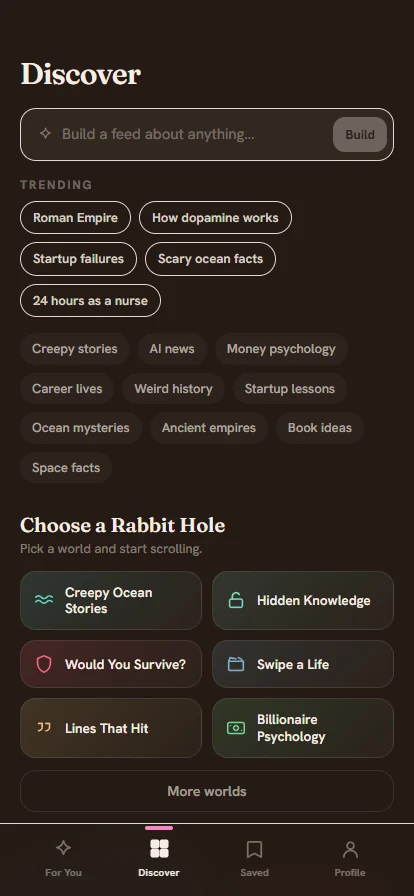
a consumer app: a full-screen swipe feed of short, source-backed cards with an ai layer that opens any of them up. built solo, end to end — native shell, react/typescript client, express and postgres backend, subscriptions through storekit, content pipeline in four languages.

problempeople doomscroll; nothing they scroll teaches them anything.

the hard parta solo developer shipping the entire stack — client, backend, subscriptions, four languages — through app store review without a team to hide behind.

  • capacitor + spm
  • react / ts
  • postgres
  • storekit
  • en / 中文 / es / pt
  one cart
     │
     ├── vendor a ──▶ ticket + fee
     ├── vendor b ──▶ ticket + fee
     └── vendor c ──▶ ticket + fee
            │
            ▼
   server re-prices every line

[ ghost kitchen operator ]

multi-brand ordering

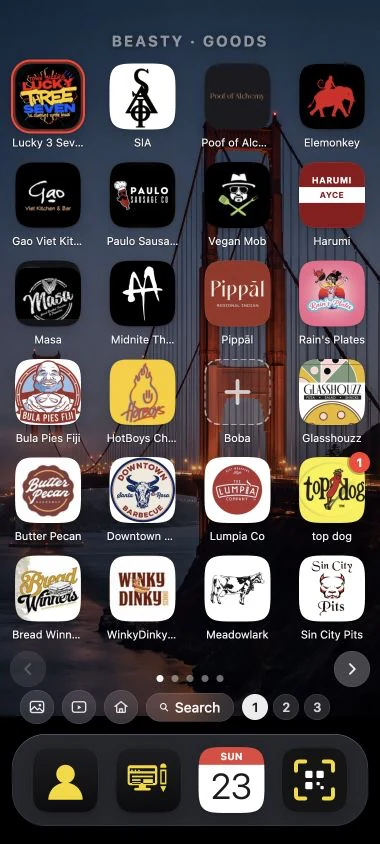
a web app that behaves like an iphone home screen — every icon is a restaurant, tapping it opens that menu. one cart spans every kitchen and one checkout covers them all, while the server re-prices each line, splits the order into a ticket per vendor and computes each vendor's fee.

problemone ghost kitchen, many brands — and no ordering product that could sell them in one cart.

the hard partthe money: one checkout has to become a correct ticket and a correct payout per vendor, priced on the server so the browser can’t lie.

  • 22 businesses
  • choice groups
  • per-vendor payouts
  • live ticket states
  33,772 zips × 9 data sources
        │
        ▼
   score ± uncertainty band
        │
   ┌────┴─────┐
   │ verdict  │  screen now / wait / no
   └──────────┘
   old model: 0.81 (leaking)
   leak-free: 0.21

[ cpr training company ]

site intelligence

decision support for where to open, staff and grow, across all 33,772 us zip codes and nine external data sources. every score carries an uncertainty band instead of false precision. the first thing it did was prove the previous model's headline correlation was reading its own answer sheet.

problema training company had to choose where in the u.s. to expand next, with real money on the guess.

the hard partthe previous model’s 0.81 correlation was leakage — it was grading itself with the answer key. the honest number was 0.21, and saying so.

  • python / fastapi
  • ~1,290 tests
  • leak-free validation
  • excel export
  inbox ──▶ classify ──▶ draft
                          │
              ┌───────────┼───────────┐
              ▼           ▼           ▼
          gmail draft  slack card  sheet row
              │
              └──▶ human presses send

[ reputation automation ]

review desk

watches the inbox for review notifications, classifies each one against an issue taxonomy, drafts a reply grounded only in the business's own verified facts, then routes it to a person as a mail draft, a slack card and a spreadsheet row. a chrome extension pre-fills the approved reply on the review site.

problemreviews decide local revenue, and answering them well takes an hour nobody has.

the hard partgrounding: every drafted reply may only use the business’s verified facts — and the machine never gets the send button.

  • gmail + slack + sheets
  • chrome extension
  • never auto-posts
  request ──▶ template ──▶ doc created
                             │
                    approved ▼ locked
                             │
                     publish ▼
              version bump + change log
                     + external pdf

[ operations · internal ]

document control

a request names a template; seconds later the google doc exists, filed in the right department folder, linked back, with the right people on it. approval locks the file. publishing bumps the version, writes the change log and exports the external pdf. built twice — once in apps script, once as six n8n workflows the team can edit themselves.

problemcompany documents lived wherever the last person saved them; approvals lived in memory.

the hard partmaking the approval step physically enforceable — a locked file, a version bump, a change log — instead of a policy nobody checks.

  • notion api
  • apps script
  • n8n
  • approvals enforced
  question
     │
     ├─ regex safety screen ──▶ escalate (no model)
     │
     ├─ bm25 + vector ──▶ rrf ──▶ evidence tiers
     │
     └─ answer ──▶ citation check
                 ──▶ legal-claim check
                 ──▶ fail? rewrite. fail again? decline.

[ chinese-language rag ]

compliance-aware assistant

a health-education assistant for a regulated market. warning symptoms are caught by deterministic rules before any model runs. every claim must cite a retrieved source by number. a final validator rejects wording the local advertising and food-safety law forbids, and if the rewrite still fails, it declines to answer.

problemhealth questions in a market where a wrong sentence in the answer breaks advertising law.

the hard partteaching a system when not to answer: deterministic safety rules before any model, citations on every claim, and failing closed.

  • hybrid retrieval
  • evidence tiering
  • output validation
  • fails closed

more at noctilucenty.github.io and github.com/noctilucenty

leon --how

four steps, no black box

you know the price before it starts and you see it working every week while it's built.

  1. 01

    free call

    twenty minutes on what your business does and where the hours go. often the answer is smaller and cheaper than you expected, and i'll tell you that instead of selling you the big version.

  2. 02

    scope + fixed quote

    written down before anything is built: what's in, what's out, what it costs, roughly how long. no surprise line items at the end.

  3. 03

    build in the open

    a working link every week, not a status email. changing your mind early costs nothing, which is the entire reason you see it early.

  4. 04

    launch + support

    code, repository, domains and accounts all go in your name. then i stay reachable. nothing is set up to make leaving me expensive.

leon --ownership

you own what i build

the biggest fear in hiring one remote developer is "what if he disappears?" — so everything is set up from day one as if i might.

  • your repositorythe code, in your github
  • your domainregistered to you, not me
  • your accountshosting, stores, dashboards
  • your api keysevery service, your billing
  • your dataexportable, documented, yours

no technical hostage situation. if we stop working together, nothing switches off, and any competent developer can pick it up where i left it.

leon --price

three ways to work together

price follows scope, not hours. a one-page site and a full system both fit somewhere on here. starting prices are floors, not instant quotes — the real number is written down before work starts, and doesn't move after.

$49+ small fixes the broken thing, the one integration, the change your last developer never answered about — the kind of job that takes a day, not a month. send it over →

fixed project

from$400

one clear thing, built and handed over.

  • quote agreed before any work starts
  • weekly working demo
  • launch, handover and training
  • 30 days of fixes included
get a quote
most jobs

full build

from$3,500

an app or a whole system, end to end.

  • discovery, design, build, launch
  • app store or play submission handled
  • integrations, payments, admin tools
  • 90 days of support after launch
  • staged payments tied to milestones
start a build

ongoing

from$450/mo

you need a developer, not a project.

  • a standing block of hours each month
  • priority turnaround on changes
  • hosting, monitoring, updates
  • new features without a new quote each time
  • cancel any month
talk it through

not sure which one you're in? that's normal. that's what the free call is for.

whoami

one person, and that's the point

i'm Leon. i'm finishing a computer engineering degree at cal state east bay, i build software day to day for a training company, and the rest of the time i ship my own things — including an ios app that went through app store review and came out the other side.

you talk to the person writing the code. nothing is handed to an agency, nothing gets lost through a project manager, and when something breaks at 9pm you're messaging the person who built it.

  • basedcalifornia — building for businesses across the u.s.
  • on sitealmost never needed — every project runs on weekly demos you open in a browser
  • speaksenglish, portuguese, spanish, chinese
  • studyingbs computer engineering, cal state east bay
  • day jobsole developer on a company ios app, its site, and its internal ai
  • own worka published ios app, an ml research repo, and the engines behind them

man leon

the questions that come first

i already have a website. do i have to start over?

usually not. most sites have one real problem — slow, broken on a phone, nobody can update it, or it doesn't take bookings. i'll tell you which parts are worth keeping. a rebuild only makes sense when fixing costs more than replacing, and i'll show you that comparison instead of asserting it.

who owns the code and the accounts?

you do. repo, domain, hosting, api keys and the store listing all go in your name. if we stop working together nothing switches off and nothing has to be rebuilt to get away from me.

how long does it take?

a business site is usually one to two weeks. an integration or automation, a few days to two weeks. a booking system or portal, three to six weeks. a full mobile app, longer, and that depends on what it does rather than how fast anyone types. you get a real estimate with the quote, not a number invented on this page.

do you disappear after launch?

fixes are included for 30 days on a fixed project and 90 on a full build. after that you can keep me on a monthly block or just message me when something comes up. plenty of people do the second one.

can you work with the tools we already use?

yes, and it's usually cheaper. square, toast, quickbooks, stripe, shopify, google workspace, notion, slack, twilio, your pos or your ats. connecting what you already pay for normally beats replacing it.

is ai actually worth it for a business my size?

sometimes. it's genuinely good at reading, drafting, classifying and answering from your own documents. it's a bad idea anywhere a confident wrong answer costs you a customer, which is why the systems i build put a person in front of anything public, and why i'll talk you out of the ai version when a boring script does the job better.

do you only work with local businesses?

no — i'm based in california and work remotely with businesses anywhere in the u.s. most software projects never need anyone on site; everything runs on weekly working demos you open in a browser. if you're around the bay and want to meet in person, that's possible too.

we're not technical at all. is that a problem?

most of my clients aren't. you describe the week in plain words — who calls, what gets retyped, where things get lost — and i translate that into software. you never have to learn the vocabulary, and everything is handed over working, with training.

i don't know what i need. is that a problem?

no. it's the most common starting point. describe the part of the week that annoys you most and we'll work backwards from there — the assistant in the corner is built for exactly that conversation.

why is everything on this site lowercase?

because i like it. the estimates, the invoices and the code are punctuated normally.

leon --contact

let's build it

tell me what your business does and what's slowing it down. the first conversation is free, and you'll leave it knowing whether software is even the right fix — including when it isn't.

or skip the inbox: describe the project in the quote form →